Level 12 / 阅读练习
后端系统分层架构
理解 API、Schema、Service、Repository、Model、Core 各层的职责。
Progress
阅读中
0/4 步完成 / 阅读后完成练习才算通关
Practice
本关怎么过
- 读完正文后确认完成阅读
- 完成 3 道选择题练习
- 答错时看解释,再回到正文补理解
一句话:分层架构就是把接请求、做业务、查数据库、定义数据格式这些事情分开放,避免项目越写越乱。
本篇学完你会什么:知道 API 层、Service 层、Repository 层、Model 层、Schema 层分别负责什么。
1. 为什么要分层
小项目可以一个文件写完。
但项目一大,容易变成:
接口里既校验参数
又写业务规则
又拼 SQL
又处理权限
又写日志
最后谁都不敢改。
分层的目标是:每层只管自己的事情。
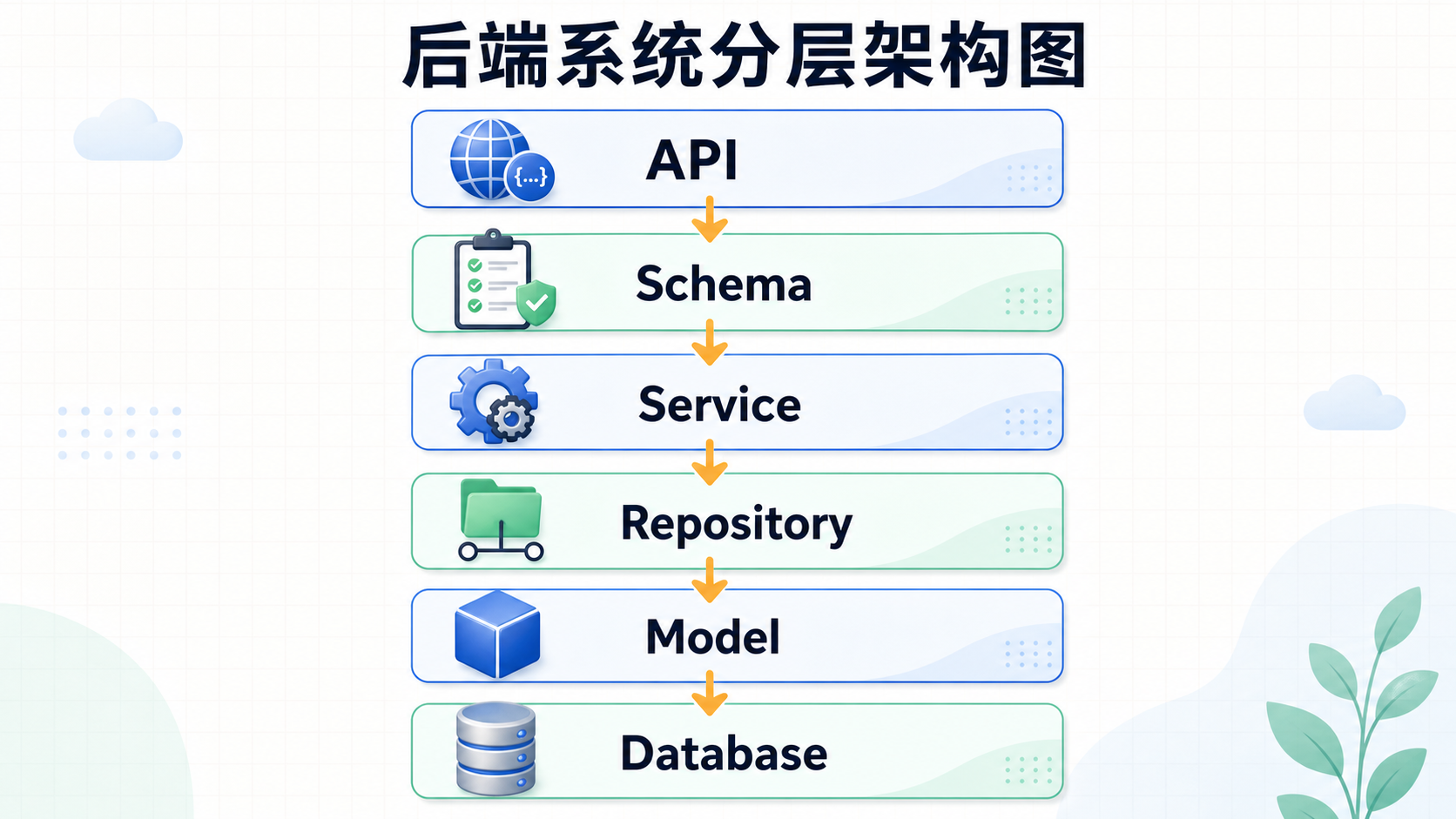
2. 一个请求怎么流转
前端请求
↓
API 层接住请求
↓
Schema 校验输入
↓
Service 处理业务规则
↓
Repository 读写数据库
↓
Model 映射数据库表
↓
Schema 整理响应
↓
返回前端
记住这条线,后端架构就不玄了。
3. API 层
API 层负责接请求和返回响应。
@router.post("/articles", response_model=ArticleResponse)
async def create_article(
payload: ArticleCreate,
current_user: User = Depends(get_current_user),
service: ArticleService = Depends(get_article_service),
):
return await service.create_article(payload, current_user)
API 层应该少写业务细节。
它主要管:
- 路由路径
- 请求方法
- 参数入口
- 鉴权依赖
- response_model
4. Schema 层
Schema 层负责数据形状。
class ArticleCreate(BaseModel):
title: str = Field(min_length=1, max_length=100)
content: str
class ArticleResponse(BaseModel):
id: int
title: str
content: str
请求模型和响应模型要分开,避免把密码、内部字段返回给前端。
5. Service 层
Service 层负责业务规则。
class ArticleService:
def __init__(self, repo: ArticleRepository):
self.repo = repo
async def create_article(self, payload: ArticleCreate, user: User):
if not user.is_active:
raise HTTPException(status_code=403, detail="用户已禁用")
return await self.repo.create(
title=payload.title,
content=payload.content,
author_id=user.id,
)
大白话:Service 是真正办事的人。
6. Repository 层
Repository 层负责数据库读写。
class ArticleRepository:
def __init__(self, db: AsyncSession):
self.db = db
async def get_by_id(self, article_id: int):
return await self.db.get(Article, article_id)
async def create(self, title: str, content: str, author_id: int):
article = Article(title=title, content=content, author_id=author_id)
self.db.add(article)
await self.db.commit()
await self.db.refresh(article)
return article
不要把复杂业务判断写在 Repository 里。
7. Model 层
Model 层负责数据库表结构。
class Article(Base):
__tablename__ = "articles"
id = Column(Integer, primary_key=True)
title = Column(String(100), nullable=False)
content = Column(Text, nullable=False)
Model 不是给前端看的,它是给 ORM 和数据库看的。
8. Core 层
Core 放全局基础能力:
core/
config.py
database.py
redis.py
security.py
logging.py
大白话:Core 是项目的水电煤。
9. 从单体到模块化单体
初学阶段不建议一上来微服务。
推荐先做模块化单体:
app/
modules/
users/
api.py
schemas.py
models.py
service.py
repository.py
articles/
api.py
schemas.py
models.py
service.py
repository.py
好处:
- 部署简单
- 代码边界清楚
- 以后真要拆服务,也有基础
10. 常见错误
| 问题 | 原因 | 解决 |
|---|---|---|
| 接口函数特别长 | API 层写了太多业务 | 抽到 Service |
| Service 直接写 SQL | 层职责混乱 | 数据库操作放 Repository |
| Model 直接返回前端 | 内部字段泄露 | 用 Response Schema |
| 一开始就微服务 | 复杂度太早 | 先模块化单体 |
| 目录很多但没边界 | 只是搬文件 | 明确每层职责 |
11. 检查清单
[ ] API 层是否只接请求
[ ] Schema 是否负责输入输出格式
[ ] Service 是否承载业务规则
[ ] Repository 是否只做数据库读写
[ ] Model 是否只映射数据库表
[ ] Core 是否放通用基础能力
[ ] 模块之间是否尽量少互相乱调
总结表
| 层 | 大白话 |
|---|---|
| API | 接待窗口 |
| Schema | 表格模板 |
| Service | 办业务的人 |
| Repository | 查档案的人 |
| Model | 数据库表设计图 |
| Core | 水电煤 |
| 模块化单体 | 一个应用里分清多个业务房间 |
下一篇建议:大白话讲解——Docker Compose 跑完整后端服务。
Checkpoint
读完后做题闯关
读完后做选择题检验理解,答错会显示解释。
先完成阅读
读完正文后点击“我已读完,进入练习”,题目会变成可答状态。